
What VINELink Covers in Imperial County
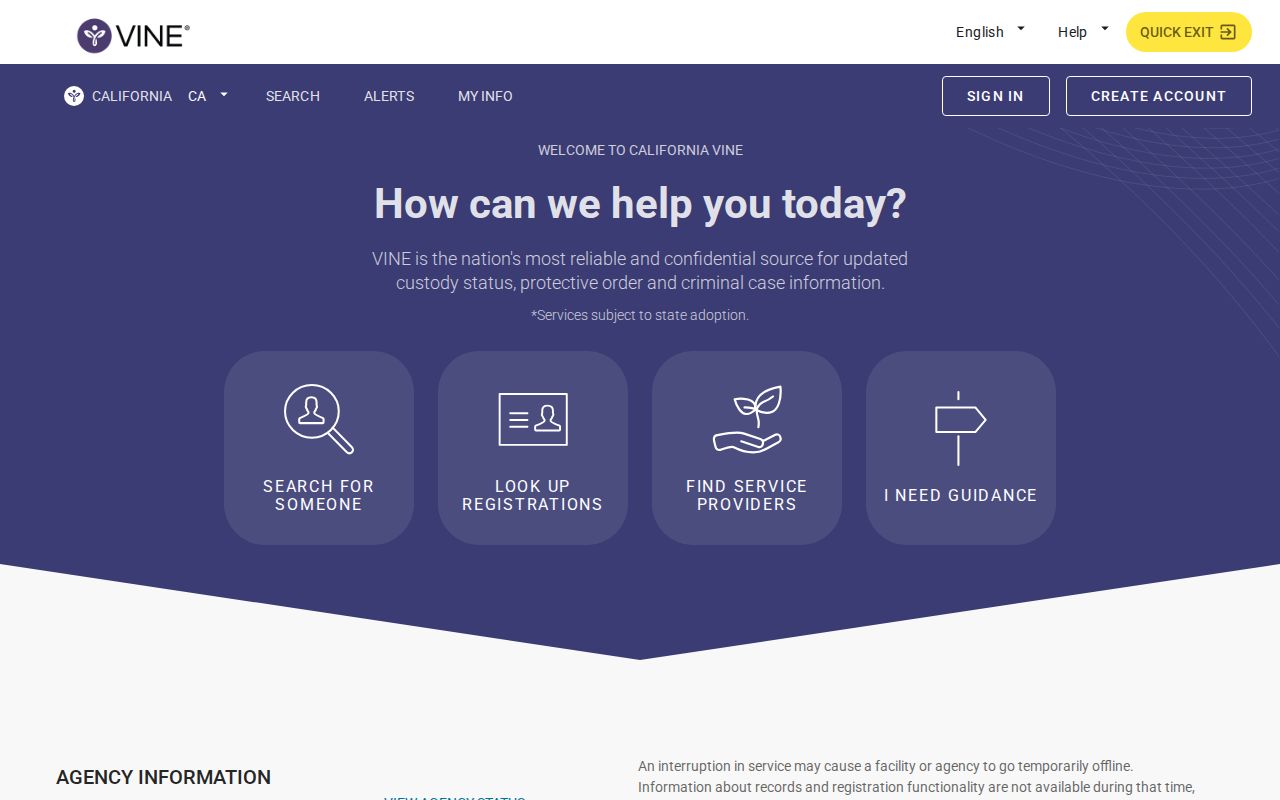
California VINE is the state VINE service for custody-status and notification searches. The Imperial County Sheriff's Office links Victim Information and Notification Everyday from its home/contact page, which makes VINE a local release-notification layer for Imperial County rather than only a generic statewide tool. The California VINE landing page describes the service as free, secure, and confidential access to custody status and criminal-case information, plus notifications.
VINE is strongest when a person is still in a participating custody record and someone needs a release or transfer alert. For Imperial County Jail cases, it should be used alongside the sheriff's jail information line, the sheriff app/current custody path where available, and the Booking Summary Request form. For CDCR state-prison cases, use CDCR/CIRIS and BPH records along with VINE where supported. For federal, USMS, BOP, and ICE custody, use the federal or immigration tools separately unless VINE specifically shows the event.
How to Check a Specific Inmate on VINELink
A VINELink search should be person-specific. It is not a substitute for a public recent-release feed, and Imperial County research did not find a sheriff web page publishing a rolling 24-hour or 72-hour release list. Use VINE to check one person, then confirm any formal release date or release type through the originating agency.
- Open California VINE at https://vinelink.vineapps.com/state/CA. If starting at the national VINELink portal, choose California.
- Search by last name and first name, or by offender, booking, or identification number if the interface offers that option and the identifier is known.
- Review every possible match carefully. Compare name, age or identifier, facility, custody location, and status before relying on a result.
- Open the matching record and read the custody status. If the person is shown in custody, they have not been released from that reporting custody source.
- If VINE shows released, out of custody, transferred, or another changed status, note the wording and any date or facility shown. Then confirm the formal release record with the sheriff, CDCR, court, or other source.
- If no result appears, try spelling variants and then use the Imperial County Sheriff's jail information/records channel, Superior Court lookup, CDCR/CIRIS, BOP, or ICE depending on the custody type.
The Imperial County released inmates search overview explains how VINE fits with sheriff records, court records, CDCR, federal custody, and ICE. Use that broader chain when a VINE result is missing, stale, or ambiguous.
What VINELink Shows About a Release
VINELink fields depend on the source agency feed and the current interface. The research supports treating VINE as a custody-status and notification source, not as a complete release/discharge record. A released result may say released, out of custody, transferred, or no longer in custody. If a release date or time is displayed, use it as a lead and verify it through the agency that held the person.
| Field or signal | How to read it |
|---|---|
| Name and identifier | Helps distinguish one person from another, especially when names match. Compare with booking number, offender ID, age, or facility where available. |
| Custody status | Shows whether the reporting custody source considers the person in custody, released, out of custody, transferred, or otherwise changed. |
| Facility or location | Identifies the reporting jail, prison, or custody location. This is critical in Imperial County because county jail, CDCR, ICE, and federal facilities are separate systems. |
| Release or change date | May appear when the source feed provides it. Treat it as a notification record unless a formal release record or court document is needed. |
| Notification option | Allows registration for alerts on release, transfer, escape, return, or other custody-status changes where supported. |
| No match | Does not prove the person was never booked or never released. Use sheriff records, court lookup, CDCR, BOP, ICE, or facility contact based on custody type. |
Register for an Imperial County Release Notification
VINE's most useful job is notification before the release happens. California county VINE instruction pages support the common registration workflow: locate the person, choose notification, enter contact information, and use a four-digit PIN for phone alerts when required. Imperial County's own site links VINE, so it belongs early in the local verification chain after a current custody or app check.
- Find the correct person record in California VINE.
- Select "Get Notified" or the equivalent notification command.
- Choose the available method, such as phone, email, text, or in-app notification if offered.
- Enter the contact information requested by VINE.
- Select language preferences if prompted.
- Create or enter the four-digit PIN for phone alerts if VINE requires one.
- Save or confirm the registration.
- When an automated phone alert arrives, enter the PIN to acknowledge it. California VINE instruction pages from other counties explain that calls may continue until the PIN is entered or for a stated period.
Imperial County's Local VINE Layer
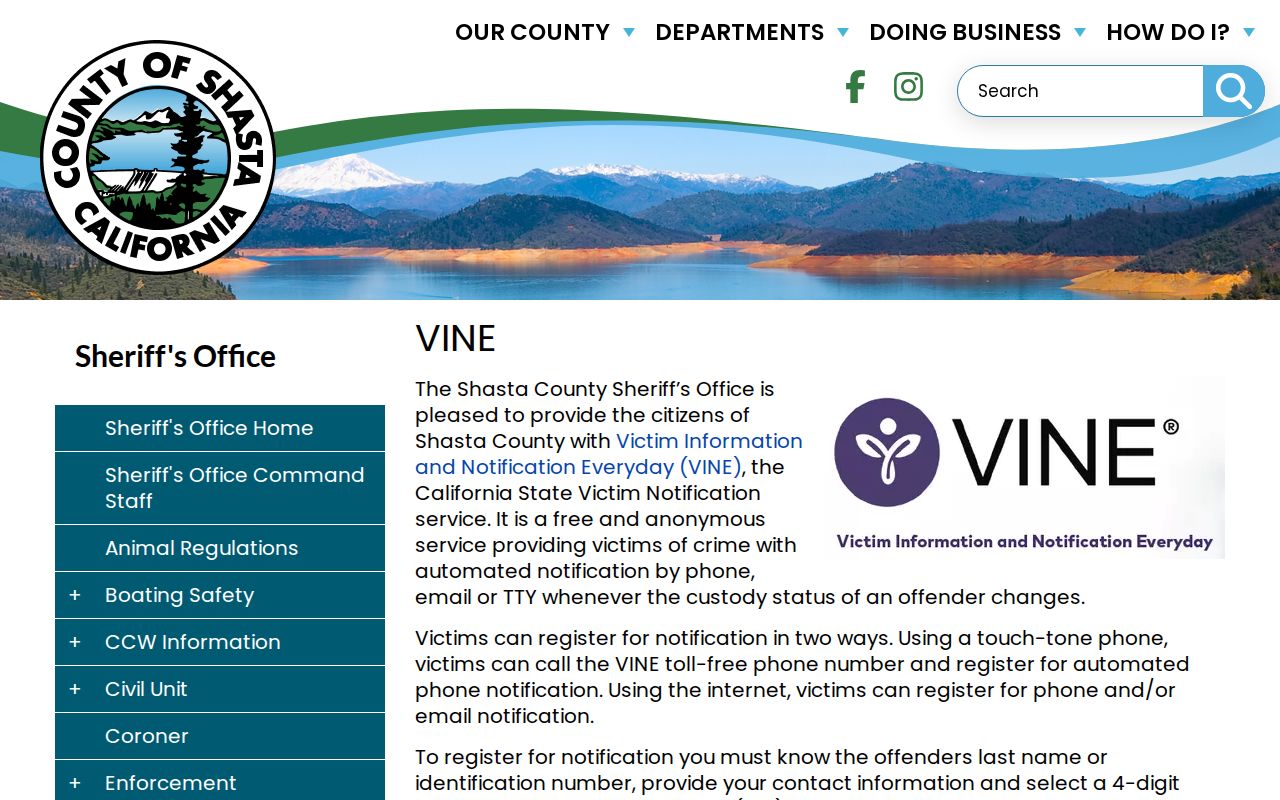
Imperial County's own sheriff contact page links VINE, while the sheriff website did not show a public web release archive in the research sweep. That makes VINE one of the first practical checks for a person who may still be in custody or may have just been released. It also means VINE should be paired with local records rather than treated as the only source.
For a county jail person, use VINE together with Jail & Inmate Information at (442) 265-2266, Records at (442) 265-2125, and the Booking Summary Request form on the sheriff's forms page. For a court explanation, use Imperial Superior Court ROA/Case Lookup, keeping in mind that sealed and confidential cases are not available publicly. For a CDCR state-prison person, use CIRIS, CDCR case records, DAPO, PRCS/probation, and BPH records where applicable.
County, CDCR, Federal, and ICE Limits
VINELink limits matter in Imperial County because multiple custody systems operate in the same county. Regional Adult Detention Facility, Herbert Hughes Correctional Center, and Oren R. Fox Detention Facility are Imperial County Sheriff's Office jail facilities. Calipatria State Prison and Centinela State Prison are CDCR state prisons. Imperial Regional Detention Facility is an ICE facility. El Centro Detention Facility is a USMS contract detention facility. Each system has different identifiers, public tools, records offices, and release meanings.
VINE is not every custody system. Use VINE for participating custody-status and notification records. Use BOP's locator for people in BOP custody or released from BOP custody since 1982. Use federal court and USMS/facility channels for USMS detainees. Use ICE's locator and facility contact for immigration detention. A transfer from county jail to ICE, CDCR, USMS, or another county is not proof of community release.
Data can lag. A just-processed jail release may not appear immediately in VINE, an app, or a court portal. A person may also drop out of a current custody view after release while the formal booking summary remains with the sheriff and the disposition remains with the court. Always match the tool to the custody source.
Confirm a VINELink Release Result
If VINELink shows a release or custody change, confirm through the agency that created the custody record. For Imperial County Jail, call Jail & Inmate Information or request a booking summary from the Sheriff's Office Records Division. For CDCR, use CIRIS, CDCR case records, DAPO, and BPH records. For PRCS or probation after release, use Imperial County Probation only where the requester has a case relationship or lawful access, because probation says it does not release who is on probation to the public due to confidentiality issues.
The formal county release record may include release date and time, release type, booking number, local identifier, arresting agency, release facility, charges or case numbers, bail or bond status, court order or sentence status, holds, detainers, and destination when the person was transferred instead of released to the community. VINE may point to the status change, but the booking summary and court record explain the legal basis.